
Addiction is often discussed in public language that feels distant, clinical, or moralizing. What gets lost in that conversation is the daily human cost: the erosion of trust, the quiet damage to families, the narrowing of hope, and the way a life can become unrecognizable one decision at a time. Almost Gone enters that space with uncommon gravity. At the center of the Robert B. Routt book launch is not just the arrival of another title, but the release of a work that asks readers to look at addiction not as a headline or abstraction, but as a lived experience with real emotional weight.
The Robert B. Routt book launch frames addiction as lived reality
One of the strengths of Almost Gone is its refusal to flatten addiction into a simple story. Too often, public conversations split into easy categories: victim or culprit, sickness or failure, redemption or ruin. Real life is harder than that. Addiction carries suffering, but it also creates suffering. It is intimate, disruptive, repetitive, and often painfully visible to the people closest to it long before the person at the center is ready to name it clearly.
That is what gives this book its force. The perspective is personal, but not self-indulgent. The subject matter is serious, yet the tone does not rely on melodrama. Instead, the narrative weight comes from recognition: the understanding that addiction is not only about substances or destructive habits, but also about distortion. It distorts judgment, relationships, priorities, memory, and identity. By the time the damage is undeniable, much has already been lost.
The Robert B. Routt book launch matters because it invites a more mature kind of reading. This is not a story designed to offer neat moral closure. It is a story that insists on honesty. In that sense, it belongs to the most valuable kind of personal writing: work that helps readers see with more precision and feel with more restraint, rather than telling them what to think.
What Almost Gone reveals about the real cost of addiction
When people speak about the cost of addiction, they often begin with the visible consequences. Those consequences matter, but a personal narrative shows how much happens beneath the surface. The deepest costs are usually cumulative. They build quietly, then all at once.
- Trust is weakened first. Family members, partners, and friends begin to question what is true, what is hidden, and what promise will be broken next.
- Time is consumed. Addiction rearranges daily life around secrecy, damage control, rationalization, and recovery from the latest crisis.
- Identity begins to fracture. The person others once knew can seem to recede, replaced by volatility, evasiveness, or emotional absence.
- Shame multiplies isolation. The longer addiction continues, the harder honest connection becomes, even with people who still care.
- Hope becomes unstable. Moments of progress may be real, but so are setbacks, and that uncertainty reshapes everyone around the struggle.
Almost Gone is effective because it understands these costs as intertwined rather than separate. The damage is not only physical or financial. It is relational, psychological, and deeply moral in the sense that it tests character, accountability, and the ability to confront reality without disguise. A book that can show this without turning heavy-handed has genuine value.
It also broadens the audience. This is not only a book for readers who have lived directly with addiction. It is also for those trying to understand someone they love, and for readers who want a more human account than the usual public script provides. Literature cannot do the work of treatment or repair, but it can restore clarity, and clarity is often where change begins.
A personal perspective changes the conversation
There is a crucial difference between reading about addiction as a social problem and encountering it as a personal reality. The first can inform. The second can unsettle. A personal perspective asks more of the reader because it leaves less room for distance. It becomes harder to rely on slogans, harder to pass quick judgment, and harder to pretend that suffering exists in a separate category from ordinary life.
That shift in perspective is part of what gives Almost Gone its relevance. Readers who want more context about the memoir and its release can explore the Robert B. Routt book launch through Robert Routt Author | Routt, where the broader literary context of the work comes into clearer view. The value of that context is not promotional; it helps explain why this story deserves careful attention rather than casual consumption.
Personal writing about addiction can fail when it becomes defensive, sentimental, or performative. Stronger work does something else. It shows how denial works from the inside. It traces the distance between what a person says, what a person believes, and what a person is actually living. It allows readers to understand that addiction rarely announces itself as catastrophe at the beginning. More often, it advances by compromise, minimization, and delay.
That is why a memoir or personal account can be so powerful. It reveals the process, not just the outcome. And in doing so, it shows that the cost of addiction is rarely paid in a single moment. It is paid in fragments: in strained conversations, in evasions that become habits, in opportunities lost, and in the slow deterioration of self-respect.
How to read Almost Gone beyond the usual recovery narrative
Readers sometimes approach books on addiction expecting one of two things: warning or redemption. But the best books in this space do more. They widen the moral and emotional frame. Almost Gone is best read not merely as a recovery-adjacent story, but as an examination of consequence, perception, and human frailty.
- Read it as a study in honesty. The most meaningful moments in writing about addiction are often the moments when self-deception begins to weaken.
- Notice the relational fallout. Addiction is never solitary in its effects, even when it feels solitary in experience.
- Pay attention to what is lost gradually. Books like this are most revealing when they show deterioration as a process, not an event.
- Resist the urge to simplify. Accountability and compassion are not opposites. Serious writing makes room for both.
- Consider the afterimage. Even after a turning point, the emotional residue remains. The story does not end when recognition begins.
This approach makes the book more useful and more lasting. It becomes more than testimony. It becomes a lens through which readers can think more carefully about dependency, suffering, and the fragile structure of a life under pressure. That is also where Robert Routt Author | Routt enters naturally: as a literary presence interested in difficult subjects that resist easy packaging.
Why the Robert B. Routt book launch feels especially timely
There is real value in books that push back against cultural numbness. Public discussion has a way of making serious subjects feel overfamiliar. Addiction, in particular, is often framed through repetition: repeated warnings, repeated outrage, repeated narratives of collapse. The danger is not that the subject becomes unimportant, but that readers stop encountering it as something human and immediate.
The Robert B. Routt book launch restores that immediacy. Almost Gone reminds readers that addiction is not only about crisis points. It is about the long middle, the private compromises, the difficult recognition, and the people who live inside the consequences. It shows why understanding matters, but it does not confuse understanding with excuse. That balance is rare, and it is one reason the book deserves attention.
In the end, the lasting power of Almost Gone comes from its refusal to look away. It does not reduce addiction to spectacle, and it does not try to soften its costs. Instead, it offers something more demanding and more worthwhile: a personal perspective that restores complexity to a subject too often handled in shorthand. That is what makes the Robert B. Routt book launch significant. It brings forward a book that asks readers to confront damage honestly, read carefully, and come away with a deeper sense of what addiction takes before anyone is ready to say how close to gone things have become.
Find out more at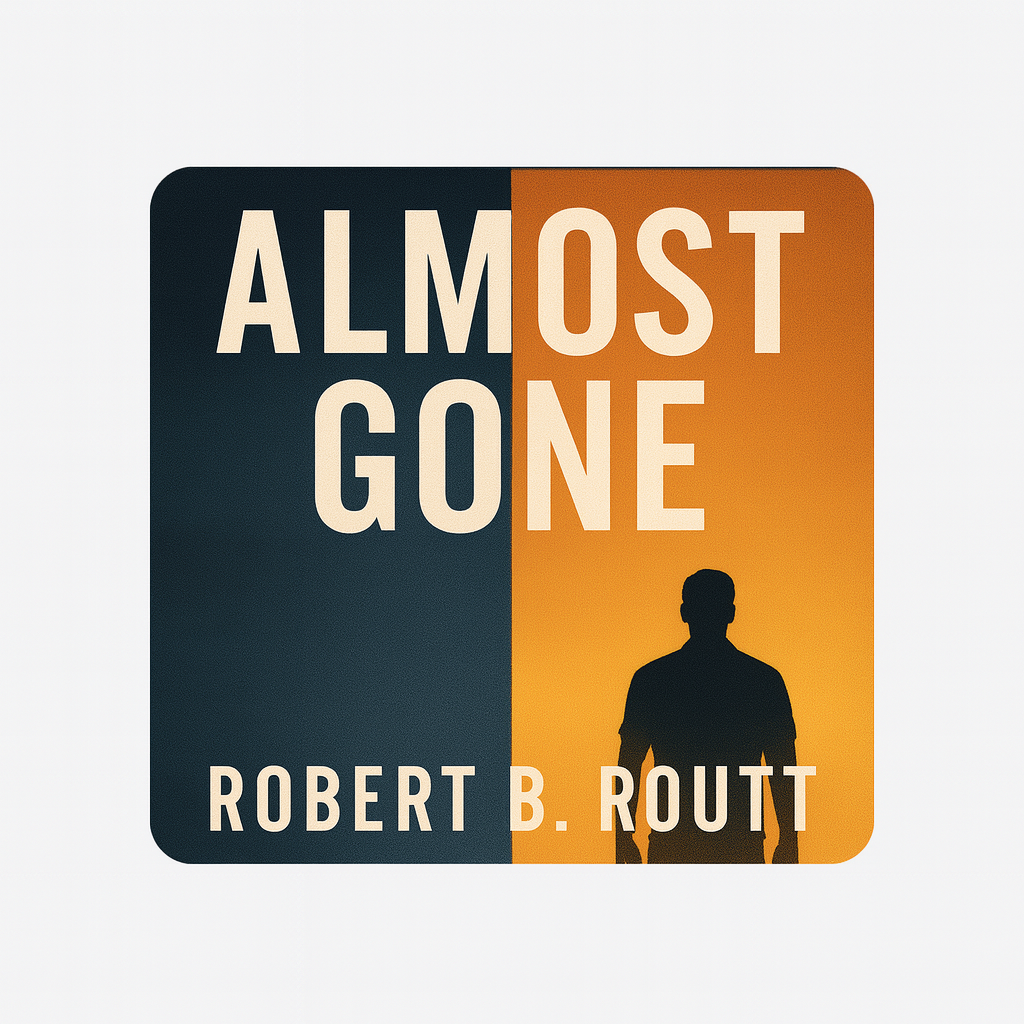
Almost Gone Robert B. Routt | A Memoir of Survival
robertroutt.com
813-464-0800
Almost Gone by Robert B. Routt: A gripping memoir of survival, addiction recovery, and faith. Discover your second chance.


